
Introduction
Most people think solar is about panels, batteries, and system size.
It is not.
Solar decisions come down to one thing:
What the system will actually produce every day.
If that is not clearly defined, the customer carries the risk.
The Two Ways Solar Is Sold
There are only two ways solar is sold in the market.
Model A: Equipment-Based
This is how most systems are sold.
- Panels, inverter, and batteries are specified
- Performance is estimated
- No clear daily output is defined
- If the system underperforms, the customer carries the risk
Model B: Output-Based
This is how Power In A Box operates.
- The system is designed around actual electricity usage
- A daily output target is defined
- The system is aligned to meet that requirement
- The decision is based on expected performance, not estimates
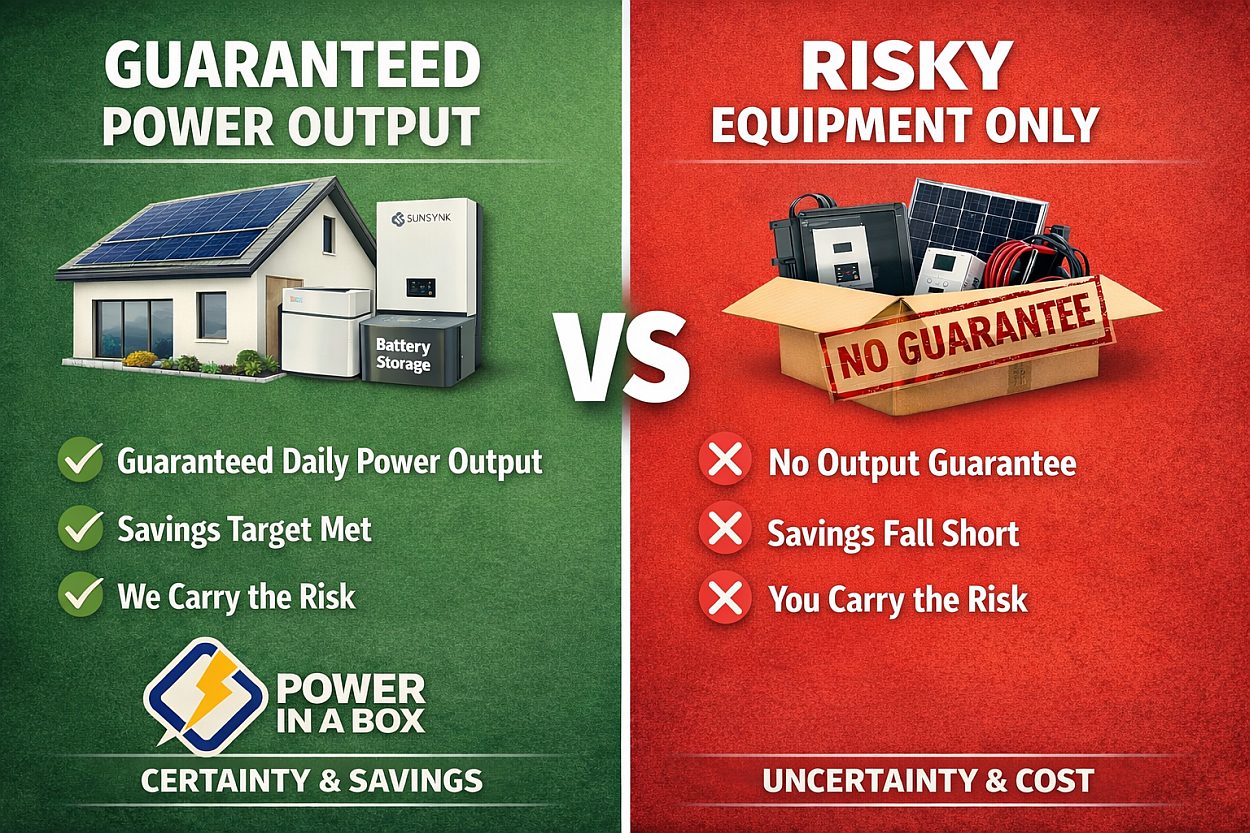
On the left is a system designed to meet a defined output.
On the right is equipment sold without a clear guarantee of what it will produce.
The difference is simple:
Who carries the risk.
How to Explain This to a Client
Use this exact explanation:
“On the left is a system designed to produce a specific amount of power every day.
On the right is equipment sold without a clear output guarantee.
The difference is who carries the risk.”
Do not add to this.
Keep it simple.
The One Question That Changes Everything
After explaining the image, ask:
“Has anyone shown you what your system will produce per day in writing?”
This question will immediately show whether the client has been given a proper evaluation.
What This Means for You
You are not selling solar systems.
You are helping the client understand how to evaluate a system properly.
Your role is to guide them to the next step:
A Precision Power Analysis.
This is a 15–30 minute Zoom call where we:
- Review actual electricity usage
- Calculate the required daily output
- Design the system around that requirement
Where Our Solutions Fit
All three Power In A Box solutions solve the same problem:
Output not matching requirement
New Install
A system designed from the start to meet the required daily output.
Optimisation
An existing system that is underperforming is corrected and improved.
Upgrade / Conversion
A system that was incorrectly designed is reworked to meet the required output.
What You Must Avoid
Do not:
- Talk about system size (kW)
- Recommend system sizes
- Compare brands
- Explain technical details
These move the conversation back to equipment, not output.
Summary
Solar is not about equipment.
It is about output.
If output is not clearly defined, the customer carries the risk.
Your role is to help the client see the difference and guide them to a proper evaluation.